
Installing Rooftop RV Systems: Getting StartedUpdated 3 months ago
Introduction
This article provides an overview of the installation process for the Full Inverter Rooftop RV Air Conditioner Heat Pump.
Each section in this article represents a step in the installation process. Click the link in each section to learn about that specific step. 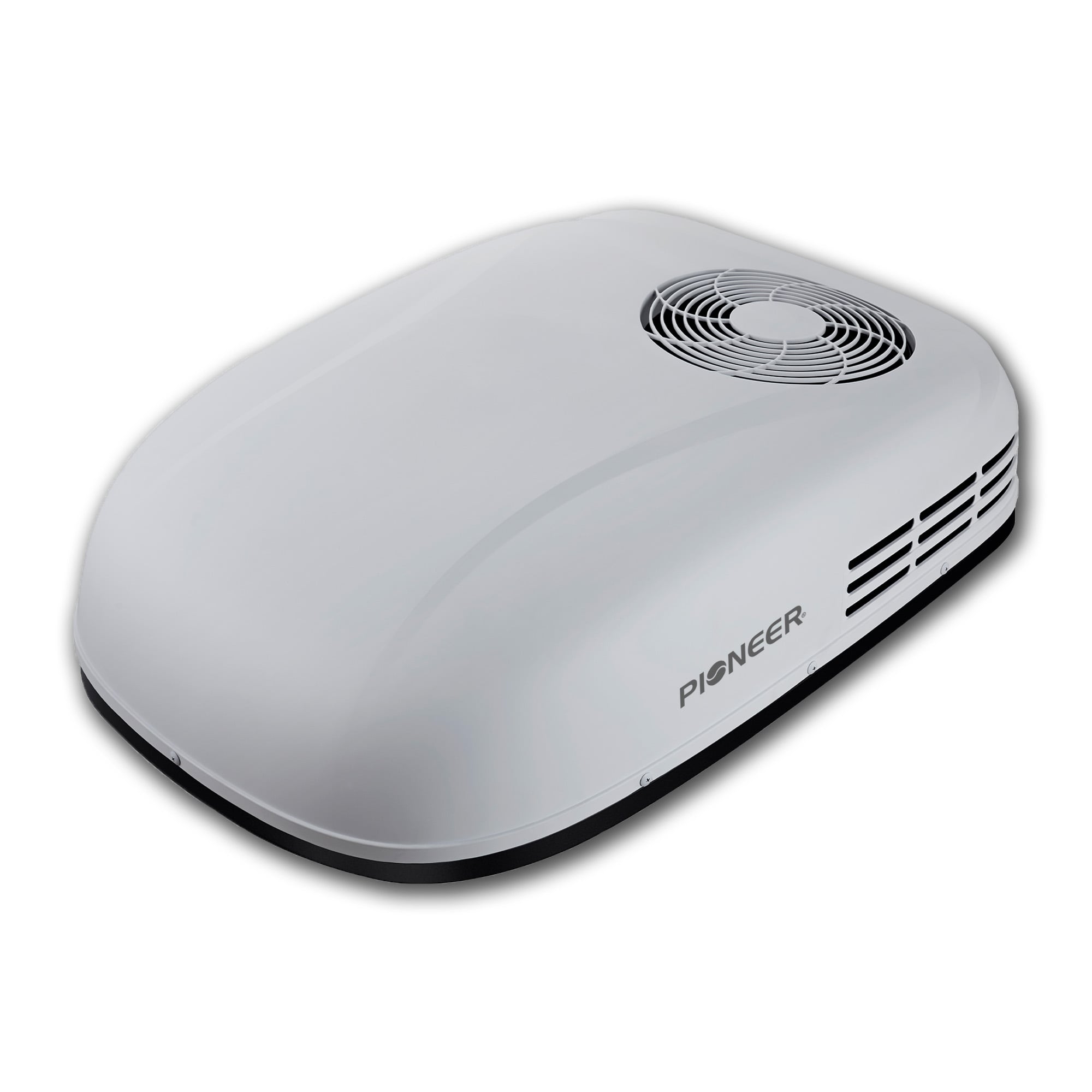
Understanding the Installation Requirements
Before beginning, we recommend reviewing the installation requirements and selecting the ideal position for the system.
Read this article to learn about the installation requirements.
Prepare for the Installation
- Remove the screws and detach the existing roof vent.
- Remove all joint fillers around the opening.
- Seal all screw holes and joints on the roof using a high-quality, all-weather sealant to prevent leaks.
1. Creating the Roof Opening
First, create the roof opening for the system. This step involves setting up the electrical wiring and treating the cut area.
View this article to get information on this step.
2. Placing the Unit onto the Roof
Place the unit onto the roof of the RV. Depending on the model, the unit can weigh up to 100 pounds. To prevent damage, use a crane or lifting device to raise it safely.
Read this article to learn how to place the unit onto the roof.
3. Installing the Air Duct & Top Mounting Plate
Install the air duct and top mounting plate. Make sure to include the appropriate air duct foam during this step.
Follow this guide to learn about this step.
4. Setting Up the Electrical Wiring for the System
In this step, you will set up the electrical wiring and connect the wires in a specific order.
Read this article for more information on this step.
5. Setting Up the System Connections
Next, properly configure the system connections. This step requires arranging the wires in a specific layout. Additionally, you must connect the plug-in wires in a precise order.
Click this link for more information.
6. Mounting the Panel
Finally, mount the system panel. This step includes installing the display lamp board onto it.
Read this article for more information.
After Completing the Installation
We recommend performing a running inspection after completing the installation.