
Understanding the Installation Requirements for Rooftop RV SystemsUpdated 3 months ago
Learn about the installation requirements for the Full Inverter Rooftop RV Air Conditioner Heat Pump.
View this article for the dimensions of this system.
Selecting the Installation Position
This product is designed for installation on an existing roof vent. Removing the old vent typically leaves a 14-1/4 inch x 14-1/4 inch (± 1/8 inch) opening.
If there is no roof vent, or if you need to install this product in a different position, follow these guidelines:
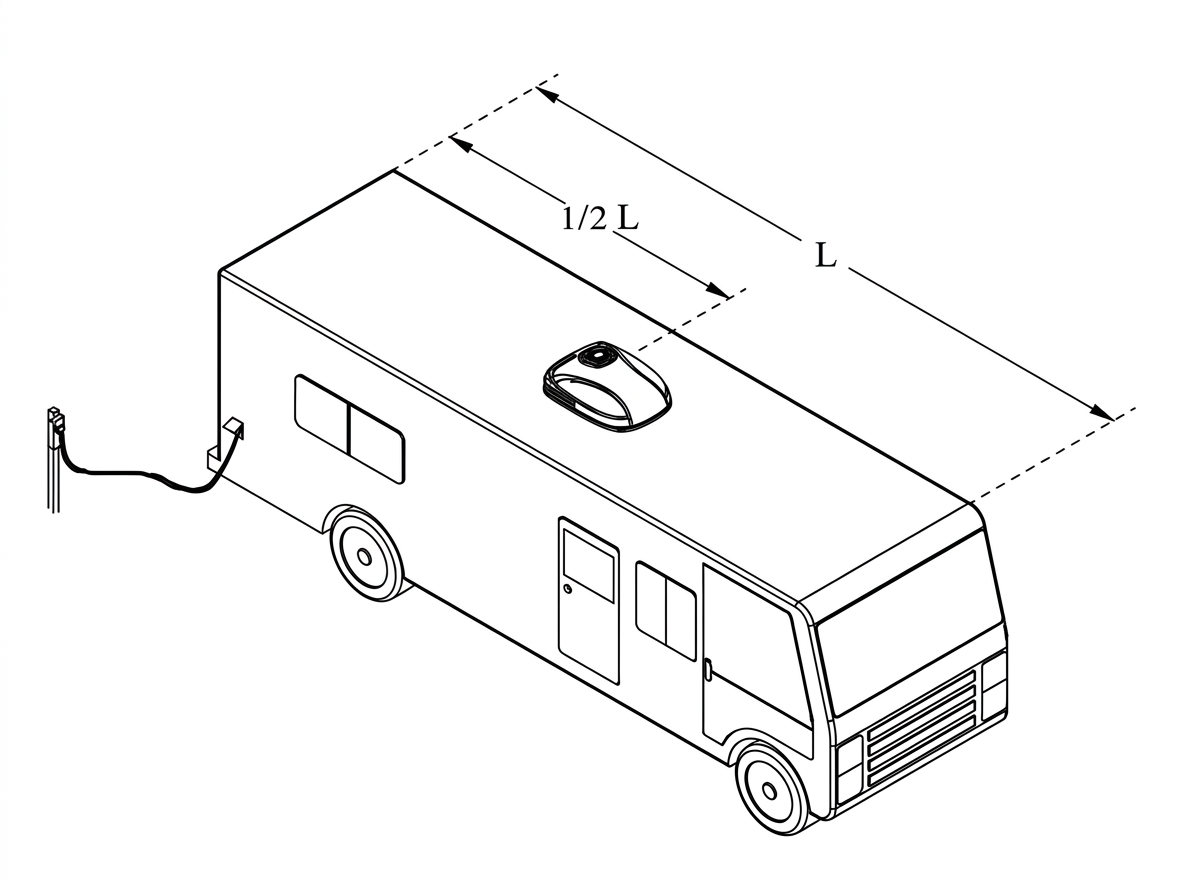
- When installing a single air conditioner, position it slightly ahead of the center point (as viewed from the front of the vehicle) and center it between the left and right sides.
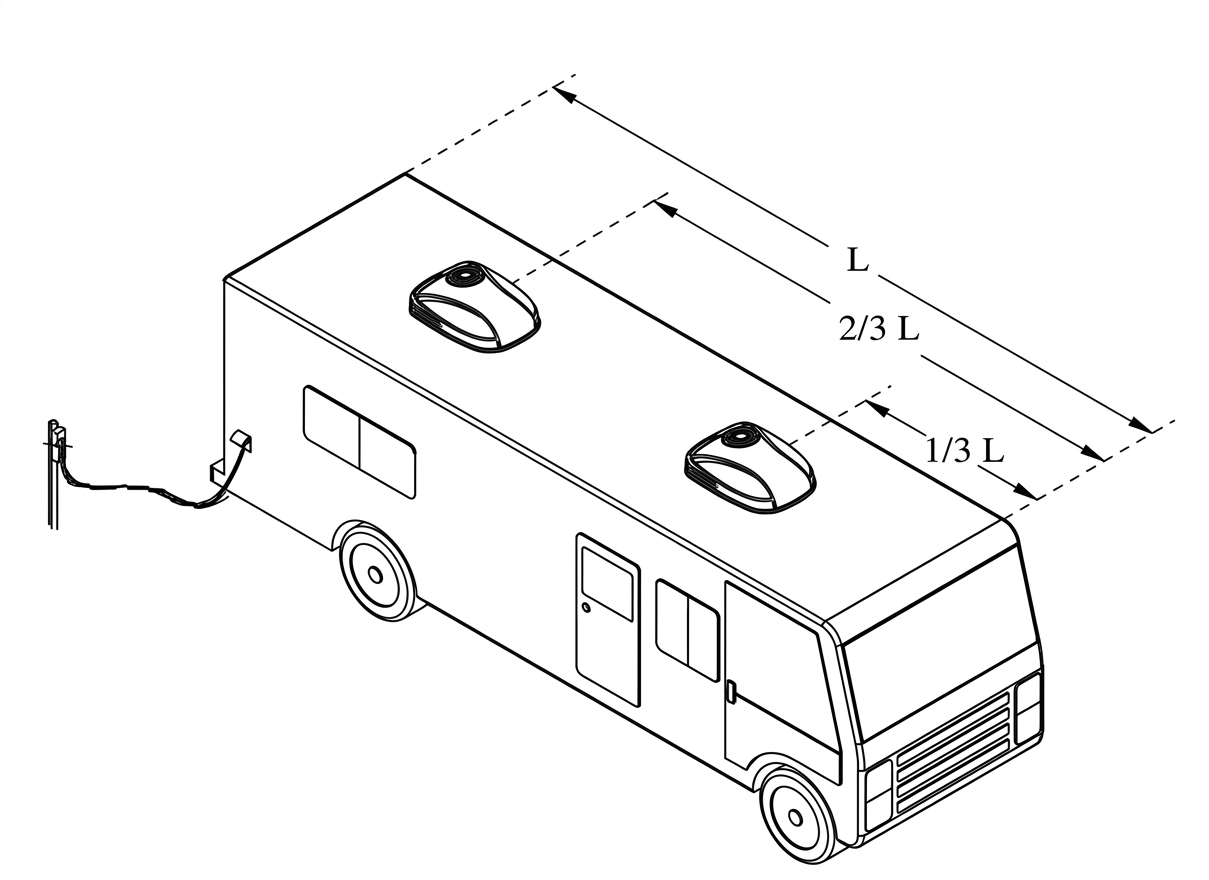
- When installing two air conditioners, position the units at the 1/3 and 2/3 marks from the front of the RV. Ensure they are also centered between the left and right sides.
Factors for Installation
When determining cooling requirements, consider the following factors:
- Size of the RV: Larger RVs may require more cooling capacity.
- Window Area: A larger window area can result in increased heat inside the RV.
- Thickness and Thermal Insulation: Consider the thickness and thermal insulation properties of the compartment walls and roof.
- Geographical Location: The climate and conditions of the location where the RV is used can impact the cooling requirements.
Installation Requirements
- The system can be installed either during production or after the RV is completed.
- For optimal performance, install the system horizontally on the roof of the RV while parked on a level surface. The installation gradient must not exceed 15 degrees.
- Once you determine the installation position, check the designated area for obstacles. Ensure a minimum clearance of 1-1/2 feet (457 mm) between the back of the vehicle body and any other roof equipment.
- The minimum center-to-center spacing for roof rafters and joists should be 15-3/4 inches (400 mm).
- The roof thickness of the RV must be at least 1 inch (25 mm) and no more than 4 inches (102 mm). If the roof thickness exceeds 4 inches, an additional air duct connection is required.
- When the RV is in motion, the roof must support a dynamic load of 135 pounds (61.2 kg). A static load design of 220 pounds (99.8 kg) is typically sufficient to meet this requirement.
- Make sure no obstacles — such as doors, partition frames, curtains, or ceiling fixtures — will interfere with the installation of the air conditioner's indoor unit.