
Install Ceiling Cassette Indoor Units: Getting StartedUpdated 2 months ago
Introduction
This article provides an overview of the installation process for ceiling cassette indoor units.
Each section in this article represents a step in the installation process. Click the link in each section to learn about that specific step.
This article is for the following system:
Quantum Ultra Ceiling Cassette (CYT-24)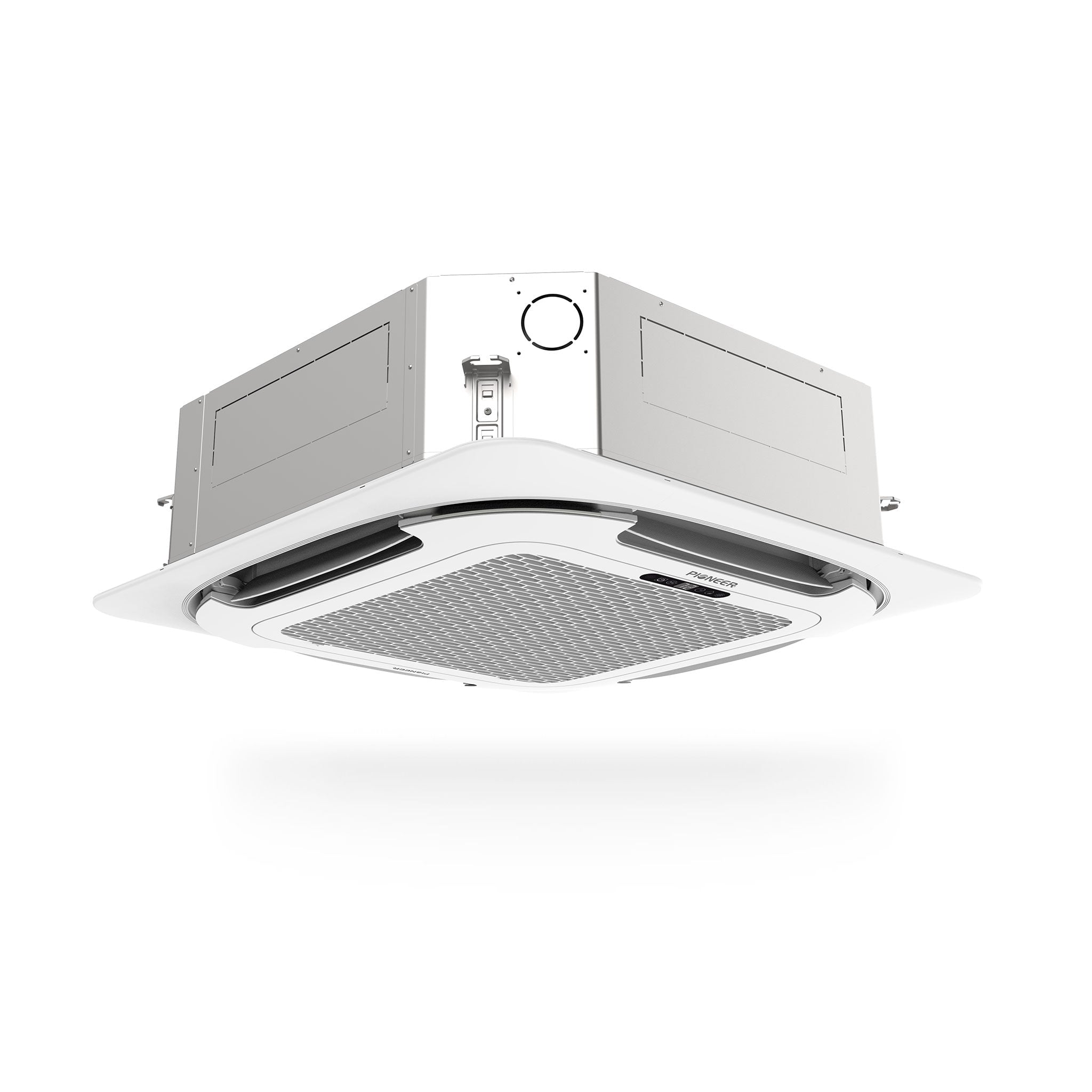
Select an Ideal Location for Installation
Before beginning, we recommend understanding how to select an ideal location for installing the indoor unit.
Click this link for information.
1. Create the Ceiling Opening & Install the Hanging Hook
The first step of the installation process involves creating the ceiling opening and installing the hanging hook. There are different mounting methods for the hanging hook depending on the ceiling structure.
Click this link to learn more.
2. Suspend the Air Handler Unit
After installing the hanging hook, suspend the air handler unit. This step requires attaching the components in a specific order.
Read this article for more information.
3. Set Up the Condensate Piping Connections
Set up the condensate piping connections for the indoor unit. This step includes insulating all drain piping and connections to prevent dew formation and dripping.
Unlike wall-mounted systems, ceiling cassette systems and other light commercial air conditioners cannot use the flexible drain hoses. In order for the flexible drain hose to be utilized correctly, we recommend routing the included hose through PVC.
Get more information by clicking this link.
4. Install the Decorative Panel
Next, install the decorative panel for the indoor unit. The steps for installing the decorative panel differ slightly between the 9,500-16,000 BTU systems and the 23,000 BTU system.
For more information, read this article.
5. Wire the Indoor Unit & Decorative Panel
Connect the electrical wiring and signal cabling to properly wire the indoor unit and decorative panel. The indoor unit requires specific gauge wires, depending on the type of system.
Learn more about this step by clicking this link.
6. Connect the Refrigerant Piping
After unwinding the copper piping kit, connect the refrigerant piping to the indoor unit. This step requires torquing the protection caps and flange connection to specific measurements.
Click this link to get more information.
7. Wrap the Lines & Seal Air Gaps
Finish the installation process by wrapping the lines and sealing the air gaps. Even small gaps can result in air or water leakage.
Read this article to learn more about this step.
After the Installation is Completed
We recommend performing a running inspection after the installation is completed. For information on performing the test run, click this link.