
Installing the Condensate Drain Hose for UYT-24 Floor/Ceiling/Low-Wall Flex SystemsUpdated 3 months ago
Introduction
Follow this procedure on installing the condensate drain hose for the Quantum Ultra Floor/Ceiling/Low-Wall Flex (UYT-24) system.
The condensate drain hose, also called a drain line, directs water away from the unit. Improper installation may cause property damage.
Prerequisites
Caution
- Ensure the drain line installation complies with all local and national codes and regulations.
- Verify that the drain line is insulated to prevent condensation and potential water damage. If it is not, insulate it properly.
- If the drain line is bent or installed incorrectly, water may leak and cause a water-level switch malfunction.
- Do not pull the drainpipe forcefully. This could disconnect it.
Installation Notes
- When using an extended drainpipe, tighten the indoor connection with an additional protection tube to prevent accidental disconnection.
- The drain line should slope downward at a gradient of at least 1/100 to prevent water from flowing back into the air conditioner.
- To prevent the pipe from sagging, space the hanging wires every 3-feet, 3-3/8-inches to 4-feet, 11-inches (1~1.5 m).
- To prevent air bubbles, keep the drain hose level or slightly titled up by 3 inches (less than 75 mm).
- Installation requires a polyethylene tube (exterior diameter = 1 in / 25 mm), which can be obtained at a local hardware store or dealer.
A. Planning the Drain Line Layout
Before beginning the installation, plan the drain line layout and connection.
B. Cutting the Drain Line (If Needed)
Cut the piping according to the intended layout and connection.
C. Insulating the Drain Line (If Needed)
Verify that the drain line is insulated to prevent condensation and potential water damage. If it is not, insulate it properly. Insufficient insulation may allow dew to form due to low condensate temperatures, resulting in potential water damage.
Insulate the drain line before beginning the connection, excluding the joint sections. These will be insulated at the end of the procedure.
Ensure the insulation material is fitted tightly with no gaps. Do not over-tighten the insulation material. This may compress the air out of the material, causing poor insulation and early aging.
The insulation material must be made of flame-retardant material. Select a material that complies with local regulations.
The thickness of the insulation material must be more than 3/8 of an inch (10 mm).
Apply specialized adhesive to the insulation seams, then secure them with tape. Ensure the tape is at least 2 inches (51 mm) wide and applied firmly to prevent condensation.
D. Connecting the Drain Hose
Attach the drain hose to the indoor unit's drain line connection.
Unlike wall-mounted systems, floor/ceiling/low-wall flex units and other light commercial air conditioning systems require a polyvinyl chloride (PVC) drain line. The flexible drain hoses are not suitable for these applications. Use a PVC pipe with a 3/4-inch outer diameter (19 mm).
Use a rubber coupler to connect the drainpipe to the PVC drain, ensuring a secure, water-tight seal. The rubber coupler and PVC pipe are sold separately from the system. 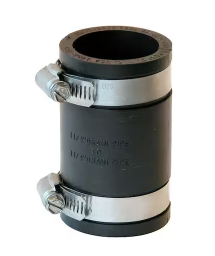
This is how the drain line assembly should look when attached to the PVC line with the rubber coupler. 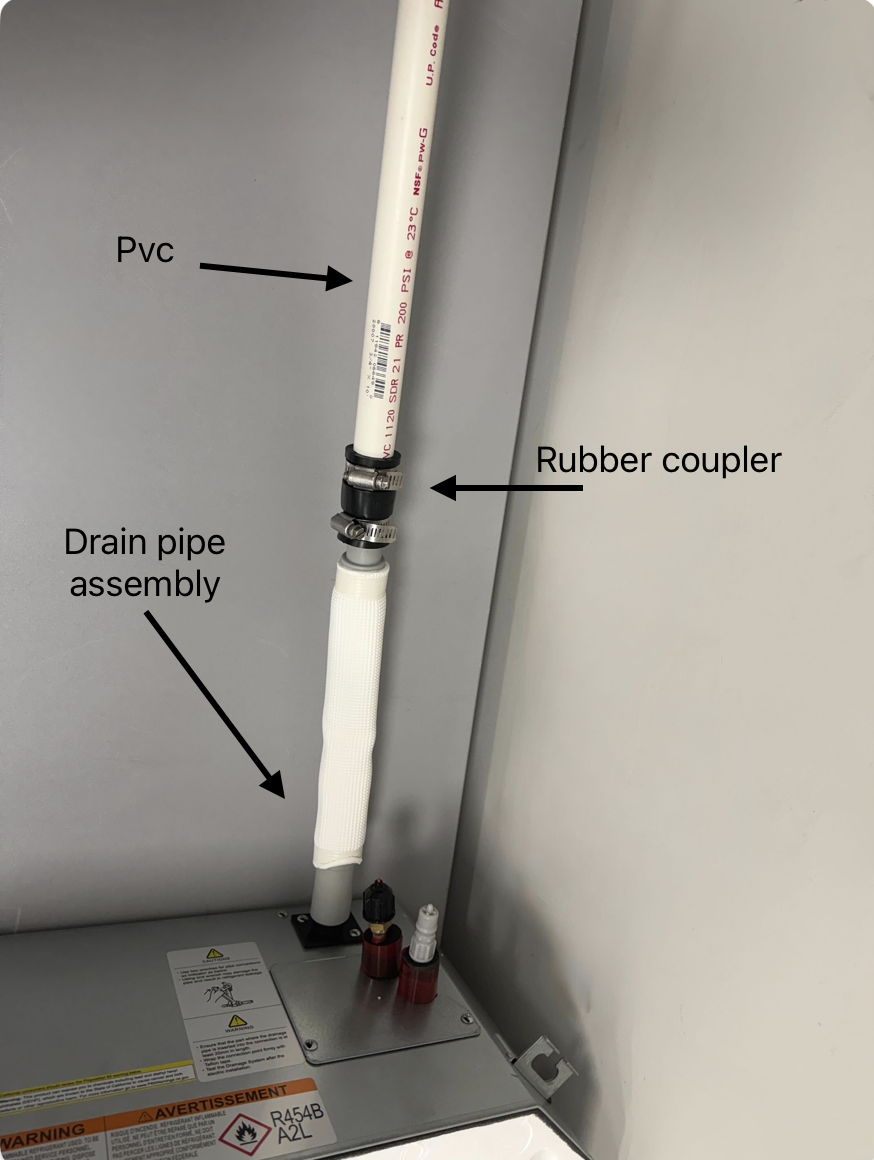
Install the drain line assembly as illustrated: 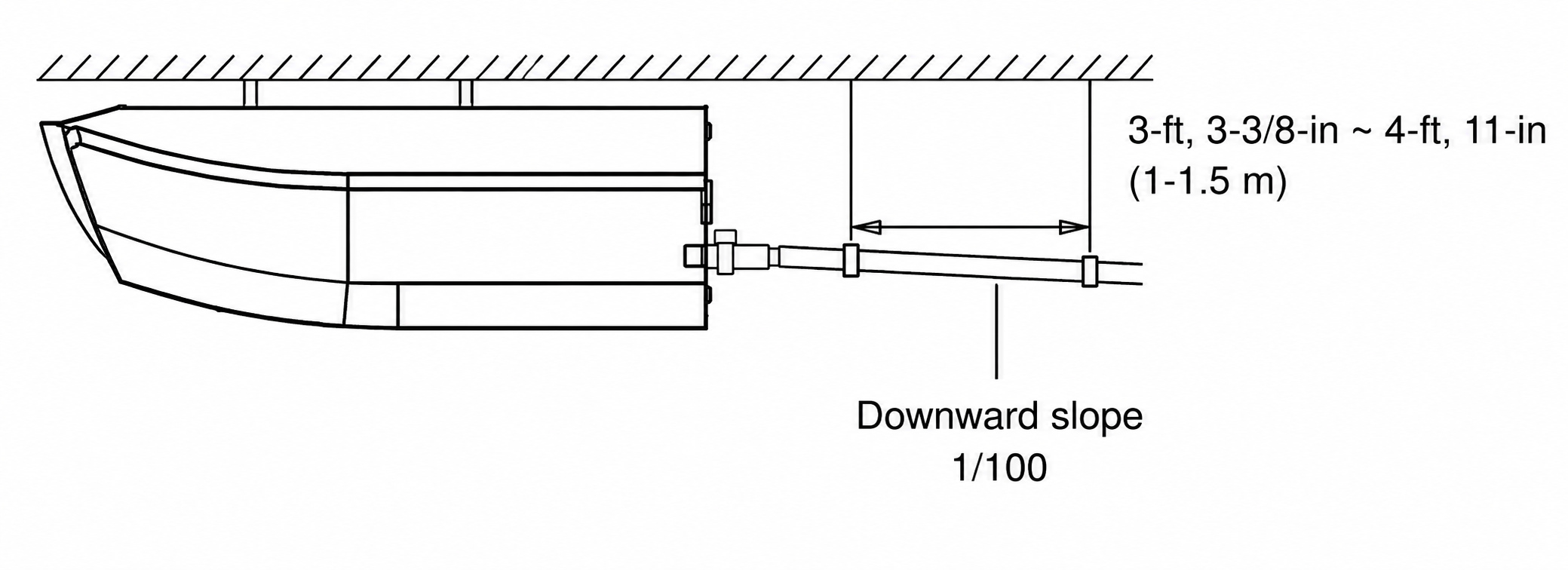
When connecting multiple drainpipes, install them as illustrated: 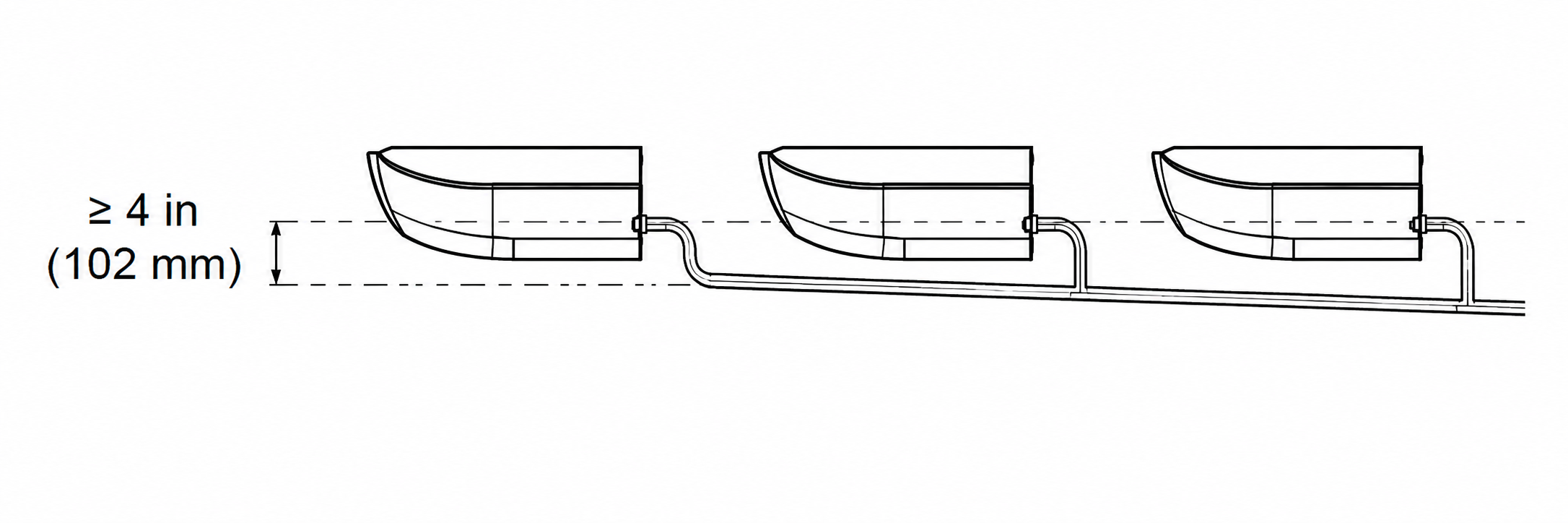
E. Passing the Drain Line Through the Wall Hole
When passing the drain line through the wall hole, make sure the water drains to a safe location where it will not cause water damage or a slipping hazard.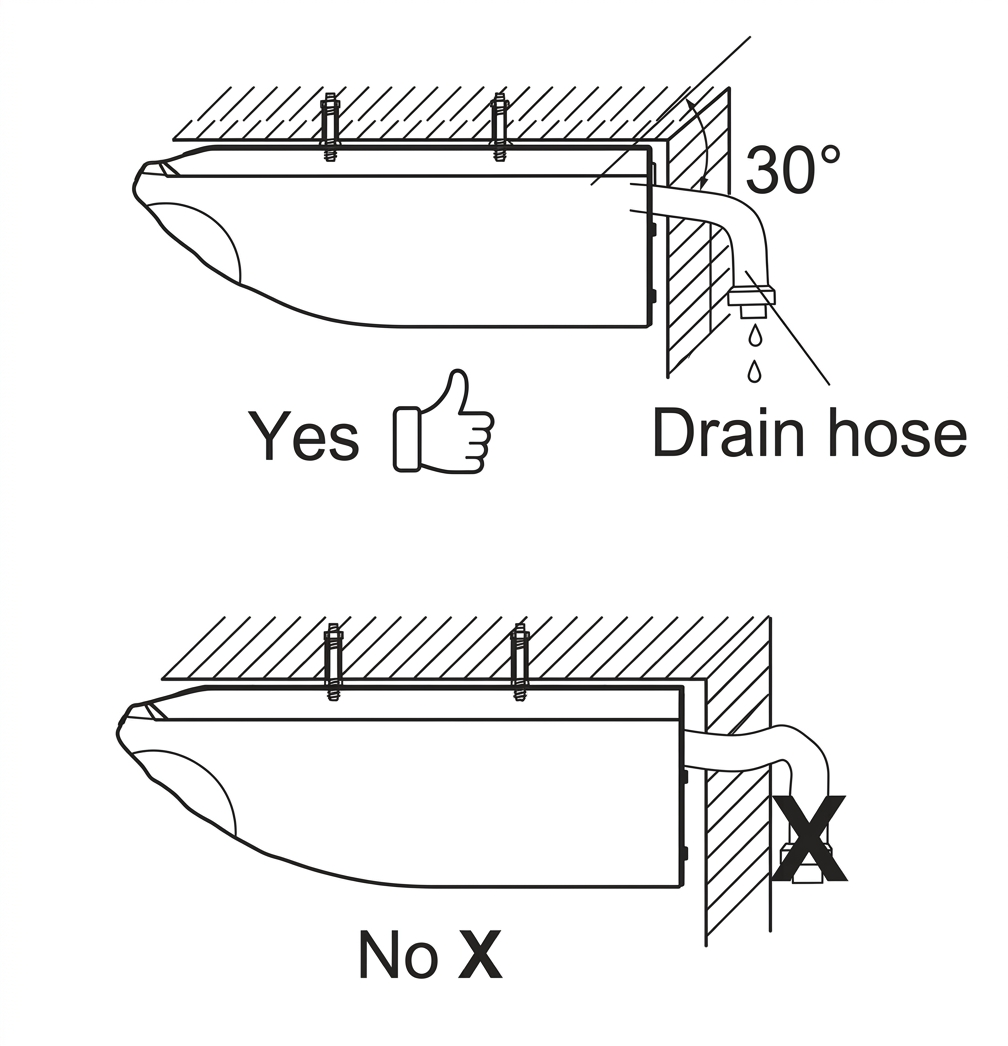
The drain line outlet should be at least 1-7/8 inches (50 mm) above the ground. If it touches the ground, the unit may become blocked, potentially leading to a malfunction.
If the water is discharged directly into the sewer, ensure the drain has a U or S pipe to prevent odors from coming back into the house.
F. Completing a Drainage Test
Complete a drainage test for the floor-ceiling flex system.
G. Insulating the Joint Sections
The pipe joint insulation should 2-4 inches (51-102 mm) longer than the gap to ensure a proper seal.
Insert the pipe joint insulation into the gap of the existing insulation.
Ensure the pipe joint insulation is securely fastened to the suction and liquid pipes to prevent gaps. Use glue to paste together the linking part. Do not over-tighten the insulation material. This may compress the air out of the material, causing poor insulation and early aging.