Fy Error CodeUpdated 4 days ago
Introduction
The "Fy" error code indicates the system detects refrigerant leakage.
This article is for the following systems:
- Diamante Essenza High-Wall (WYT-17)
- Diamante Essenza High-Wall (WYT-20U)
- Diamante Pro High-Wall (WYT-20S)
- Quantum Ultra High-Wall (WYT-24)
- Quantum Hyperformance High-Wall (WYT-25)
- Quantum Fresh High-Wall (WYT-FA)
- Quantum Ultra 8-Way Ceiling Cassette (CYT-24)
- Quantum Ultra Ducted Ceiling Concealed (RYT-24)
- Quantum Ultra Universal Floor-Ceiling Flex (UYT-24)
Troubleshooting
Note: An HVAC professional may be required for assistance.
The troubleshooting recommendations for new or recently installed systems include:
- Open the valves on the outdoor unit fully. The valves release the refrigerant from the outdoor unit into the circuit.
- Ensure that the length of the piping used for the indoor unit does not exceed the pre-charge refrigerant length. (25 feet pre-charge per zone)
- Inspect the system for a potential leak. Check the following:
- Oil stains or residue around the system’s fittings and connections.
- Hissing or bubbling sounds near the system when it’s running.
- Reduced cooling or heating performance.
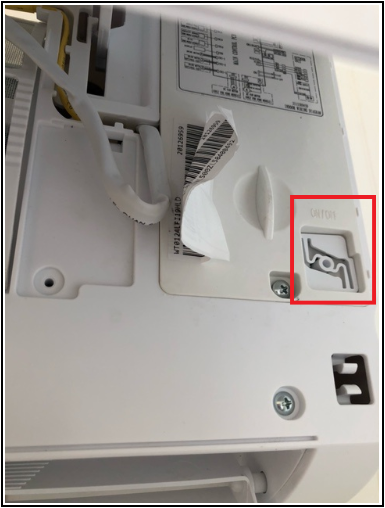
- Check the pressure PSI for the system and verify it’s within the appropriate range. Use compatible gauges while the system is on and running to check the pressure PSI. You can force the compressor to turn on using the manual button on the indoor unit. Note: Use the Refrigerant Pressure-Temperature chart for reference when checking the pressure PSI. Refrigerant Pressure-Temperature chart
The troubleshooting recommendations for units include:
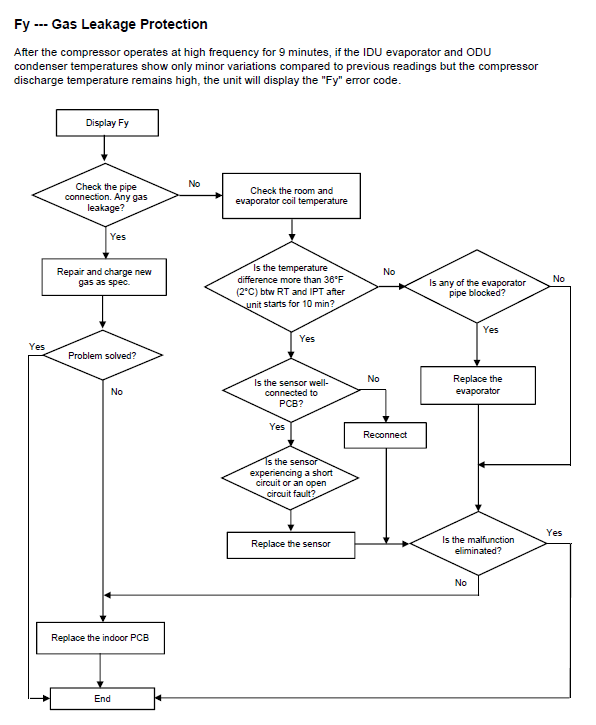
- Check the pipe connection for any gas leakage.
- If there is a gas leakage, repair and charge new gas as spec.
- If there is no gas leakage, check the room and evaporator coil temperature.
- Repair and charge new gas as spec.
- If the error continues, replace the indoor printed circuit board (PCB).
- Check the room and evaporator coil temperature. Determine if the temperature difference is more than 35.6°F (2°C) between the RT and IPT after starting the system.
- If yes, check if the sensor is connected to the PCB.
- If no, check if there are any obstructions in the evaporator pipe.
- Confirm the sensor is connected to the PCB.
- If yes, check if the sensor has short circuited.
- If no, reconnect the sensor to the PCB.
- Check if the sensor has short circuited. Replace the sensor if it short circuited.
- Check if there are any obstructions in the evaporator pipe.
- If yes, replace the evaporator.
- If not, replace the indoor PCB.
Note: Contact our Parts and Warranty department for any replacement components. Call 1-800-919-0150; Option #4.
Methods for Checking Leaks
The following are recommended methods for checking leaks:
- Check for leaks by combining water with a small amount of dish soap or liquid detergent. Apply the soapy water solution to the fittings, connections, and tubing of the indoor and outdoor units while the system is turned on. The particular spot where the bubbles form indicates the location of the refrigerant leak.
- Leak detector tools can detect refrigerant leaks through electronic sensors along the piping and around the unit coils.
- Nitrogen pressure testing is commonly used by leak detection techs.
Troubleshooting Diagram